I remember standing at my counter with a bowl of glossy chocolate and peanut butter melting together, the kitchen light catching tiny streaks of shine as I stirred, and feeling a kind of delighted curiosity. That night I tested a small batch of No-Bake Easter Egg Peanut Butter Haystacks while a thunderstorm tapped the windows, and the mix smelled warm and familiar, like a bowl of childhood sweets. If you like playful twists on old favorites, you might peek at a related idea in my notes about peanut butter Easter eggs inspiration, which sparked the pastel candy idea that finished these clusters.
Why This No-Bake Easter Egg Peanut Butter Haystacks Became a Favorite
This recipe matters to me because it lives in that sweet place between easy and thoughtful. I wanted something fast enough for a weeknight treat but indulgent enough to feel special when friends stop by. After a few rounds of tasting and small changes, the balance of soft marshmallow pockets and crunchy chow mein noodles finally felt right.
I tested tiny batches to watch how the texture changed with plain versus salted peanut butter, and I learned that a little creaminess goes a long way. The pastel M&M’s were my last-minute idea to make each cluster look like a tiny Easter egg, and pressing them on top added a festive pop. It became a favorite because it looks like effort but comes together with honest, simple steps.
The Story Behind This Small-Batch No-Bake Easter Egg Peanut Butter Haystacks
I kept the recipe intentionally small because tiny test batches teach more than large ones sometimes do. Working in small bowls lets you notice details—the way the chocolate shifts from glossy to thick, how the marshmallows puff and settle, and when the chow mein noodles stay crisp instead of soggy. Those little observations helped me trust the moment to stop stirring and start scooping.
This is a recipe born of curiosity and quiet kitchen tests. I adjusted the marshmallow amount, tested brands of chocolate chips, and tried different peanut butter textures. Each change taught me something, and when the clusters finally set with the right spring and crunch, I knew I had a keeper.
Watching It Transform
“The moment the texture shifts, you know it’s ready.”
Start with a glossy pool of melted chocolate and peanut butter that moves slowly when you tilt the bowl. As you fold in the chow mein noodles and marshmallows, look for an even coating that holds the pieces together but still leaves the noodles defined. That visual cue, plus a slight warmth in the bowl, tells you when to scoop and let the clusters rest.
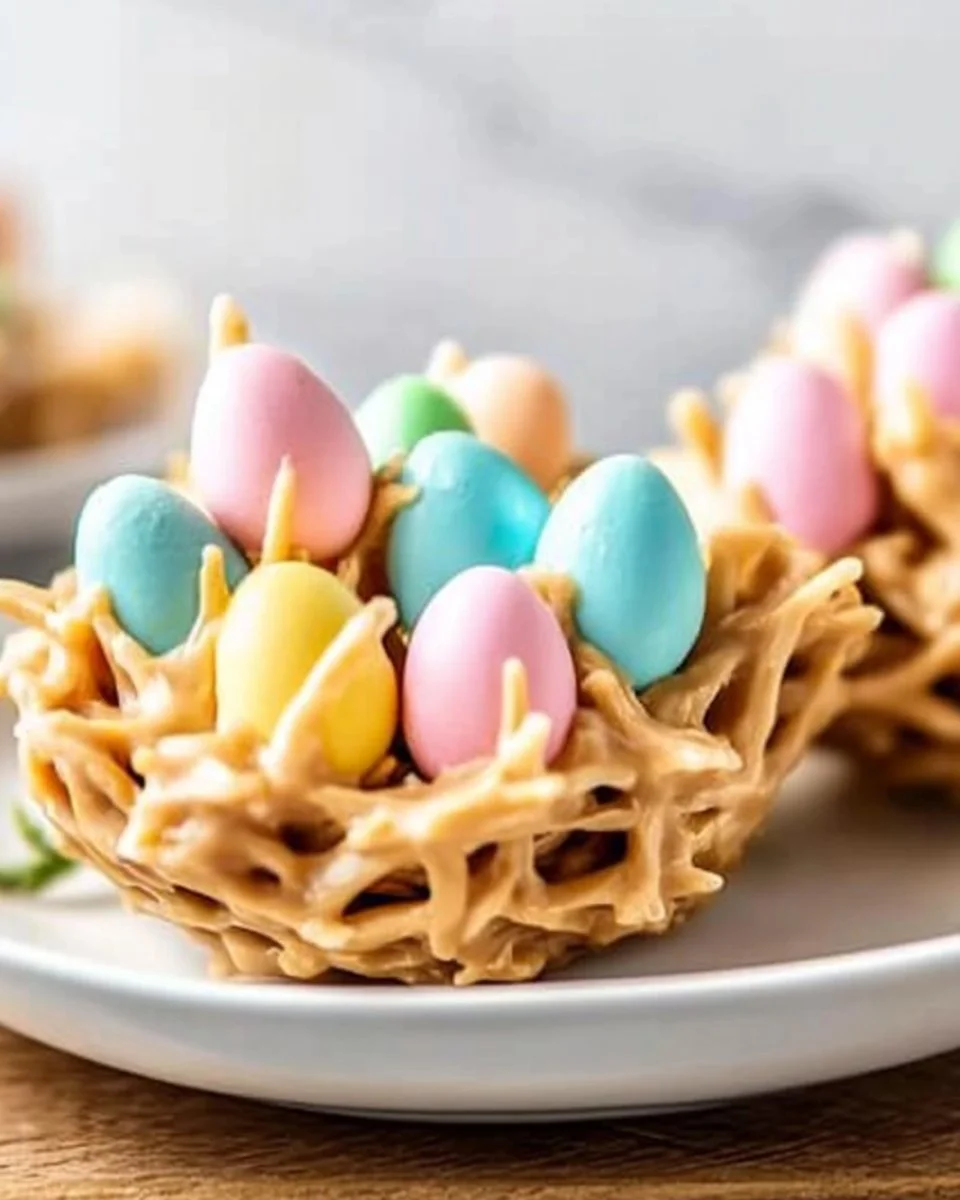
Watch how the marshmallows soften but do not disappear, leaving small white pockets against the dark chocolate. The pastel candies sit prettily on top and give a hint of color before the first bite. These are not complicated signals, but they are what make the difference between a shy snack and a showy, homey treat.
Ingredients You’ll Need
1 cup peanut butter, this helps with structure and gives the clusters a nutty, rich base.
2 cups chocolate chips, choose semi-sweet or milk for the sweetness level you prefer.
3 cups chow mein noodles, they add crispness and a delicate crunch that defines a haystack.
1 cup mini marshmallows, these bring soft pockets of sweetness and a gentle chew.
1/2 cup pastel M&M’s (optional), they add color and a candy shell that makes each cluster feel like an egg.
1 teaspoon vanilla extract, this lifts the chocolate and ties the flavors together.
I list each ingredient plainly because small changes matter. Pick a peanut butter you enjoy eating by the spoon; the flavor carries through. For chocolate, chips melt quickly and predictably, which is helpful when you work with small batches. The chow mein noodles should be dry and fresh so they crack pleasantly under a bite.
Step-by-Step Directions
- In a microwave-safe bowl, combine the peanut butter and chocolate chips. Microwave in 30-second intervals, stirring in between, until smooth. Watch for a smooth sheen and stop when the mixture pours slowly from the spoon.
- Remove from the microwave and stir in vanilla extract. Stir until the vanilla is fully mixed and the aroma lifts, signaling the flavors are coming together.
- Gently fold in the chow mein noodles and mini marshmallows until fully coated. Work carefully so the noodles keep their crisp shape and the marshmallows stay distinct.
- Drop spoonfuls of the mixture onto wax paper or a baking sheet lined with parchment paper. Aim for even sizes so they set at the same pace and look tidy when plated.
- If desired, press a few pastel M&M’s on top of each cluster. Press just enough to nestle them into the surface without flattening the cluster.
- Allow to cool and set at room temperature or refrigerate until firm. Stop once the clusters feel set to the touch but still offer a little spring under pressure.
- Enjoy your no-bake haystacks! Share them on a tray or store them for snacking, and notice how the first bite balances chocolate, peanut butter, crunch, and soft marshmallow.
How This No-Bake Easter Egg Peanut Butter Haystacks Comes Together
The rhythm of making these clusters is gentle and forgiving. You melt, stir, and fold with a kind of patient curiosity, and you pay attention to texture rather than timing alone. The moment the mixture glistens and moves smoothly, you know it will coat the noodles without turning them into a soggy mess.
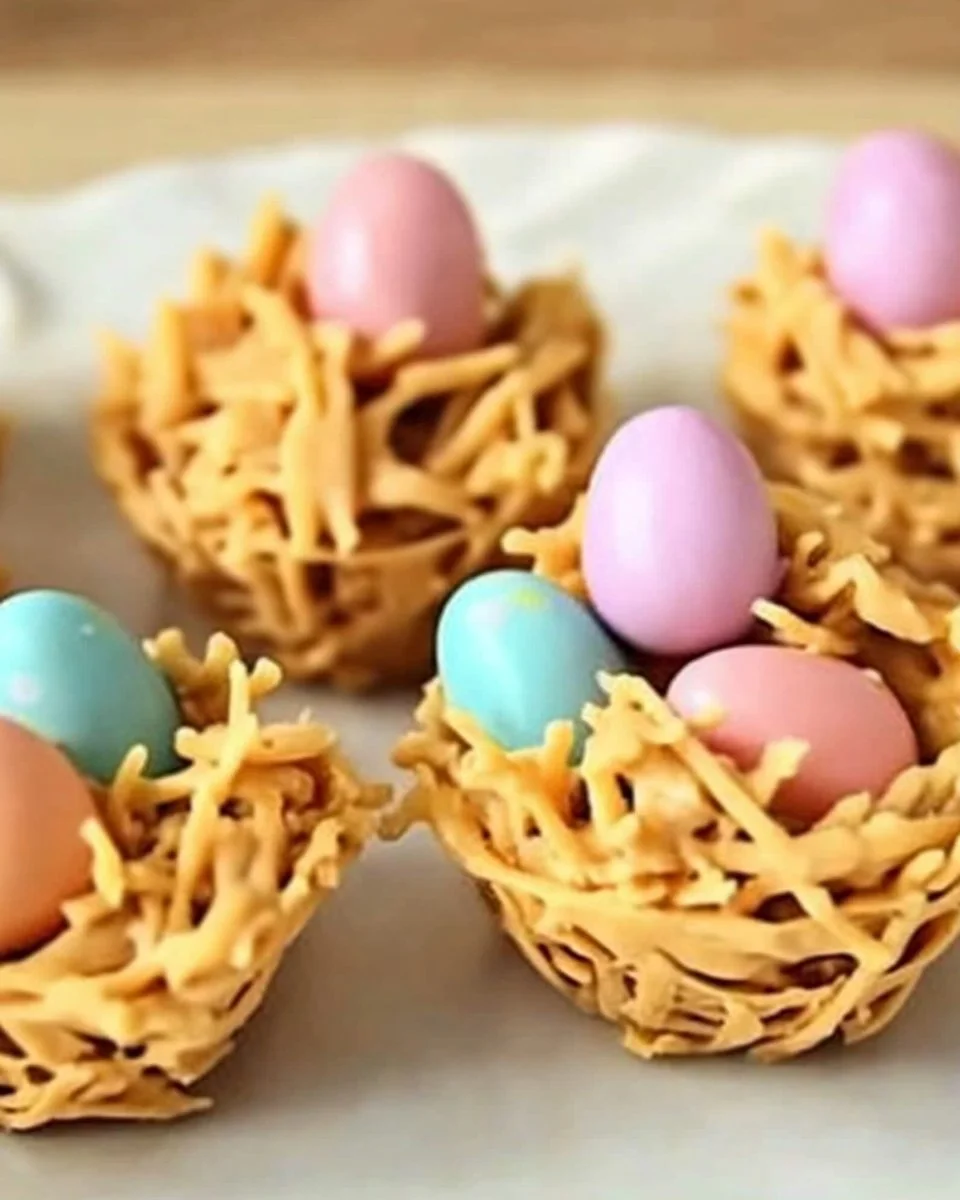
When you fold the mix, do it slowly and with a light touch. You want coverage without crushing the noodles. Drop the clusters with a spoon and give each one room to breathe on the parchment. Once they set, they look almost like little nests, and that visual surprise is one reason I love this recipe.
When I Serve No-Bake Easter Egg Peanut Butter Haystacks
I tend to make these for casual gatherings where people graze with coffee or tea. They are also a cheerful addition to a holiday plate, especially around Easter when pastel candies feel right. I like a simple tray lined with wax paper or parchment, letting the clusters sit without fuss so the colors and textures show.
For a small dinner party, I place them beside cookies and a bowl of fruit. For a quiet night at home, a plate and a mug of tea are enough. They feel like a treat you can reach for without ceremony, and that is exactly how I want dessert to feel sometimes.
Keeping No-Bake Easter Egg Peanut Butter Haystacks Fresh
Store these clusters in an airtight container at room temperature if you plan to eat them within a few days. The texture stays pleasant and the noodles keep their snap. If your kitchen is warm, the refrigerator helps them hold shape, but chilling can tighten the chocolate and make the marshmallow pockets slightly firmer.
Avoid storing them near strong-smelling foods because the chocolate will pick up odors. If you do refrigerate, bring them to room temperature for a few minutes before serving to restore some of the softness. Expect the clusters to be at their best within one week when stored properly.
Carol’s Baking Notes
- Texture balance matters. I learned to favor a slightly drier mix so the chow mein noodles stayed crisp. If the mixture feels too loose, add a small handful of noodles to absorb the extra moisture.
- Peanut butter choice changes the outcome. Natural peanut butter gave a lovely roasted flavor but sometimes made the mix softer. A regular commercial peanut butter gave more body and helped the clusters hold shape.
- Chocolate temperature is key. Melt slowly in 30-second bursts and stir well between intervals. Overheating makes the chocolate grainy and can stiffen the mix when it cools.
- Marshmallows are forgiving. They soften and add chew without changing the structural integrity of the clusters. If you prefer a chewier bite, use slightly larger marshmallows or add a few extra.
- Candy placement is an aesthetic choice. Press pastel M&M’s on top while the clusters are still warm so they nestle in. If you wait, they might not adhere as well.
These are small, practical notes from doing this more than once in a real kitchen. I tested variations in different bowls and on different surfaces to see how cooling and airflow affected set time. Those quiet experiments saved me from surprises at serving time.
Variations I’ve Tried
- Salted peanut butter swap. Using salted peanut butter adds a savory lift that cuts sweetness and makes the chocolate taste deeper. It is a favorite when I want contrast.
- White chocolate drizzle. Melt a few tablespoons of white chocolate and drizzle over set clusters for a pretty contrast. It also plays up the Easter look when you add color.
- Nutty additions. A small handful of chopped pretzel or roasted almond adds more crunch and an extra layer of flavor. Keep additions small so you do not overwhelm the noodle crunch.
- Coconut and dried fruit. For a tropical twist, fold in unsweetened shredded coconut and a few chopped dried cherries. The texture changes in a pleasing way and keeps the mold-free spirit of the recipe.
- Mini peanut butter cups. Replace the pastel M&M’s with mini peanut butter cups pressed on top for a deeper peanut butter moment. It becomes decadence in a bite.
I encourage you to try small swaps rather than overhauling the recipe. The recipe’s strength is its simplicity, so small changes highlight a different quality without breaking the balance. Test one change at a time and note what you like.
When I Bring These to Friends
I often take a tray to neighbors or tuck a few clusters into a simple paper bag for a friend. They travel well for short distances and do best when kept in a cool spot during the ride. If I am packing them for a picnic, I add a layer of parchment between layers so they do not stick.
For larger gatherings I double the batch but still work in small bowls. Doubling means you must watch the temperature of the melted chocolate more closely because it can cool and thicken. That is a small change in technique but an important one to keep the clusters easy to scoop.
FAQs About No-Bake Easter Egg Peanut Butter Haystacks
Can I make this ahead of time?
Yes, and in some cases it actually sets better after resting, especially once the texture has fully settled. Store in an airtight container and bring to room temperature before serving for the best mouthfeel.
What if my chocolate seizes while melting?
If chocolate thickens, try stirring in a tiny splash of neutral oil or a small sliver of butter to smooth it. Gentle heat and patience usually prevent this, so melt in short intervals and stir often.
Can I use a stovetop double boiler instead of a microwave?
Absolutely. A double boiler gives you slower, gentler heat which can be easier to manage. Stir frequently and remove from heat once the chocolate and peanut butter are combined and glossy.
How long will these keep in the fridge?
They keep well for up to two weeks refrigerated, but the texture becomes firmer. For the most pleasant bite, let refrigerated clusters sit at room temperature for 10 minutes before eating.
Can I make them nut free?
Yes, swap the peanut butter for a seed butter like sunflower seed butter, and use dairy-free or simply chosen chocolate. The flavor shifts, but the method stays the same.
Small Batch Testing Stories
In my first test, I used creamy peanut butter and half the marshmallows. The clusters set nicely but felt a little monochrome in texture, so I increased the marshmallow amount slightly for a softer chew. In another test, I tried breaking the chow mein noodles into smaller pieces. That change made the clusters denser and less nest-like, so I returned to larger noodle pieces.
I also learned that the type of baking paper matters. Parchment gave a gentler release than wax paper, but wax paper was fine for short-term holding. Those are the kinds of tiny choices that feel more important when you make a dozen batches.
Serving Ideas That Feel Thoughtful but Easy
Arrange the clusters on a simple white plate with a few sprigs of fresh mint for color. Pair them with a bowl of fresh strawberries or sliced apples to balance the richness. If you serve them at a holiday table, scatter a few loose pastel candies around the tray for a playful touch.
For a kids’ party, place a small napkin beneath each cluster so little hands can grab one easily. For coffee hour, stack them on a small cake stand and let guests help themselves. The visual is always inviting and relaxed.
Final Thought
I hope this No-Bake Easter Egg Peanut Butter Haystacks encourages you to experiment a little and trust your instincts the way I’ve learned to trust mine. Baking is a kind of conversation with ingredients, and these clusters are a friendly, forgiving one. Make a small batch, notice the little changes, and share a few with someone who likes surprises in their dessert.
No-Bake Easter Egg Peanut Butter Haystacks
Ingredients
Main Ingredients
- 1 cup peanut butter This helps with structure and gives the clusters a nutty, rich base.
- 2 cups chocolate chips Choose semi-sweet or milk for the sweetness level you prefer.
- 3 cups chow mein noodles They add crispness and a delicate crunch that defines a haystack.
- 1 cup mini marshmallows These bring soft pockets of sweetness and a gentle chew.
- 1/2 cup pastel M&M's (optional) They add color and a candy shell that makes each cluster feel like an egg.
- 1 teaspoon vanilla extract This lifts the chocolate and ties the flavors together.
Instructions
Preparation
- In a microwave-safe bowl, combine the peanut butter and chocolate chips. Microwave in 30-second intervals, stirring in between, until smooth.
- Remove from the microwave and stir in vanilla extract. Stir until the vanilla is fully mixed.
- Gently fold in the chow mein noodles and mini marshmallows until fully coated.
- Drop spoonfuls of the mixture onto wax paper or a baking sheet lined with parchment paper.
- If desired, press a few pastel M&M's on top of each cluster.
- Allow to cool and set at room temperature or refrigerate until firm.