If you love the ritual of cracking open something cold and fizzy but hate the sugar crash and bloating that follow, probiotic soda is the sweet spot between comfort and function. Instead of pressurized CO₂ and heavy syrups, you use a simple wild starter—called a ginger bug—to build natural bubbles and live cultures right in your own kitchen. With a glass jar, some fresh ginger, and a few minutes of prep, you can turn everyday juice or tea into a low‑sugar soda that actually supports your gut and fits into a realistic weight‑loss routine.
This guide walks you through the whole process step by step, then gives you five proven flavor combinations that stay light, refreshing, and easy to drink every day.
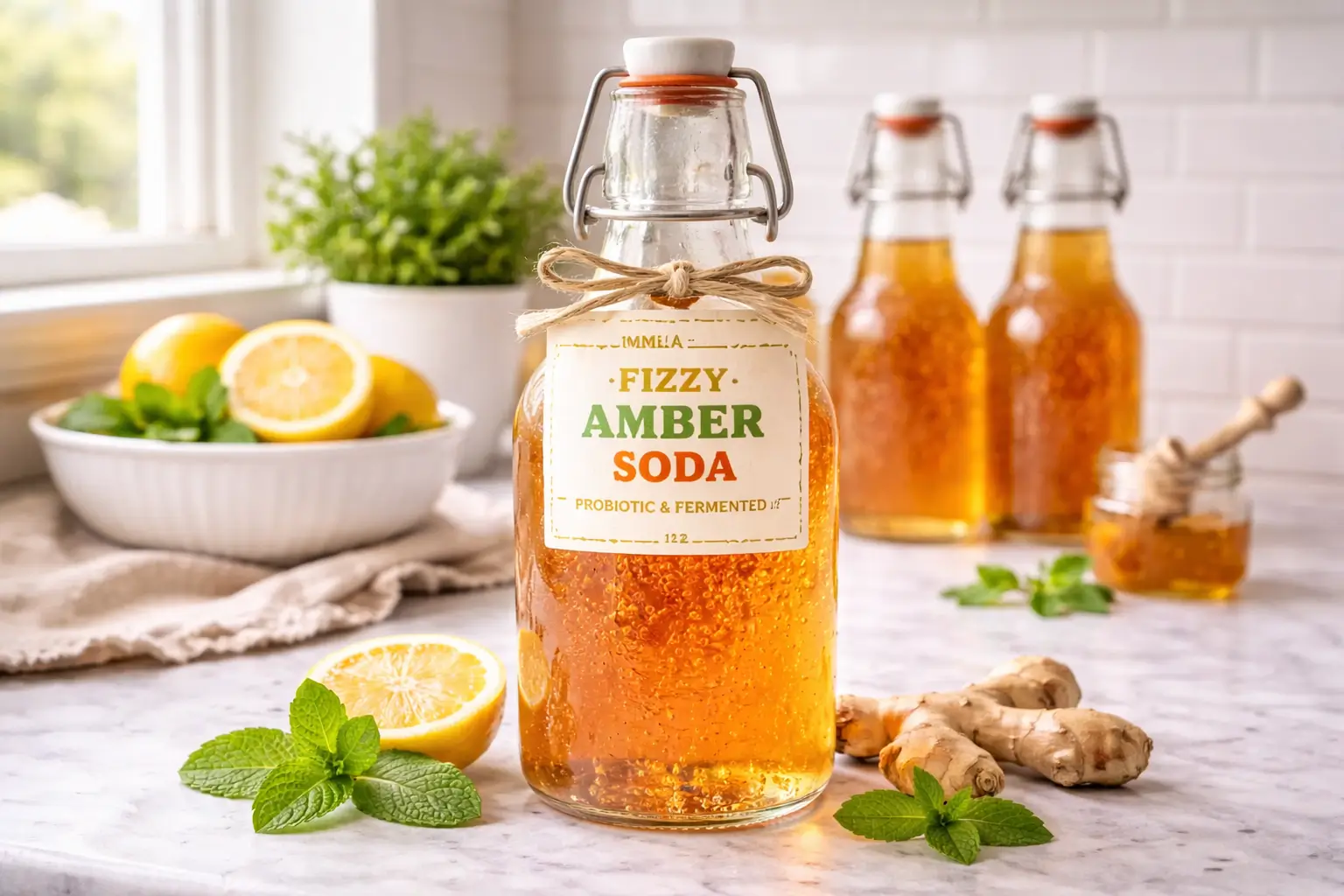
Key Takeaways
- A ginger bug is the easiest wild fermentation starter for naturally fizzy probiotic soda at home.
- The full process takes about 8 days from scratch, but only 3 days once your ginger bug is active.
- You can flavor your soda with lemon, berries, hibiscus, turmeric, or any fruit you enjoy.
- Homemade fermented soda contains live cultures that commercial versions often do not.
- Probiotic soda recipes for gut health and weight loss help by replacing sugary drinks, reducing bloat, and supporting daily digestion naturally.
- No special equipment needed beyond a glass jar, a swing-top bottle, and filtered water.
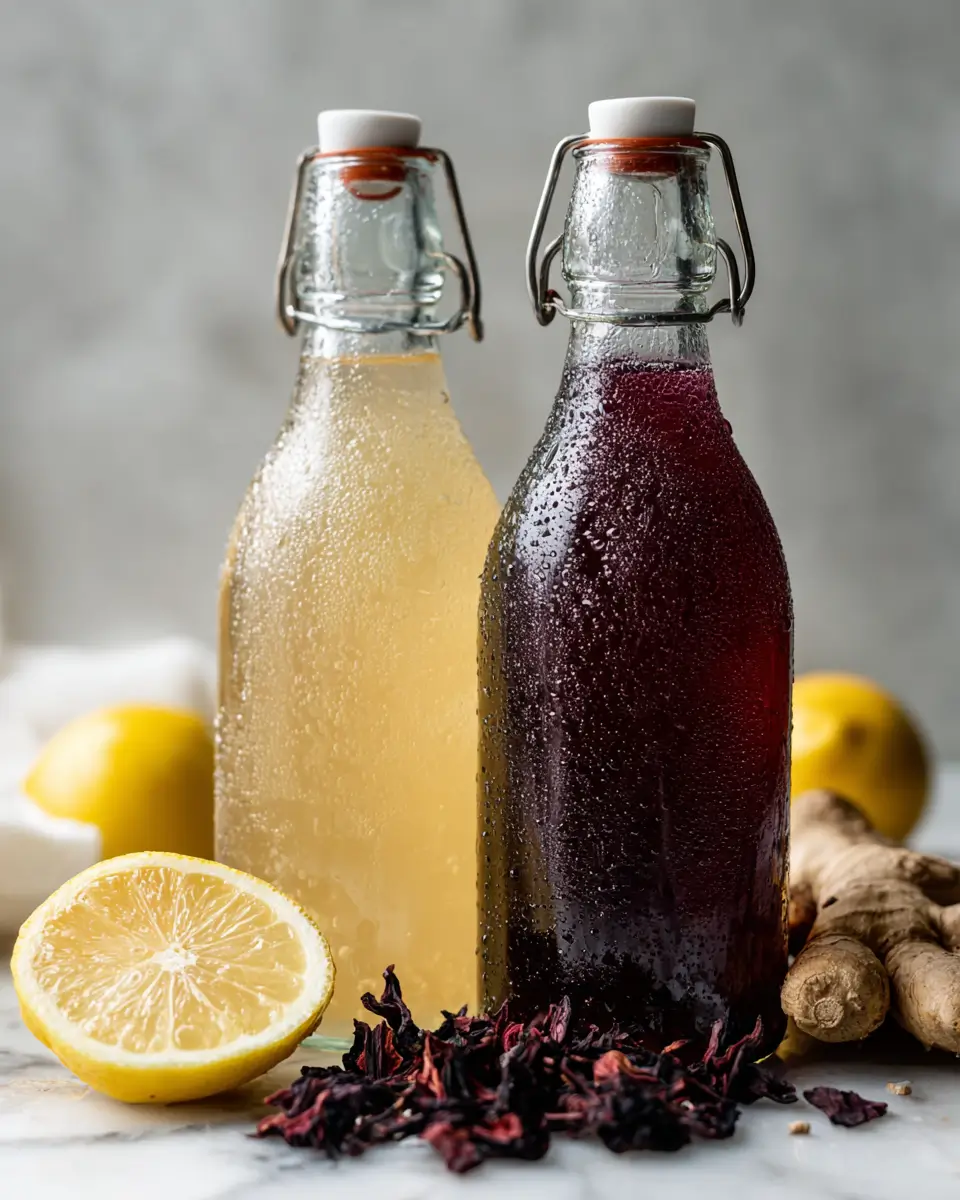
Best Probiotic Soda (Ginger Bug Fermented Soda)
Ingredients
- 1 tablespoon fresh ginger, grated (with skin) for ginger bug, daily feeding
- 1 tablespoon white cane sugar for ginger bug, daily feeding
- 1/4 cup filtered water for ginger bug, daily feeding
- 4 cups filtered water for soda base
- 1/4 cup white cane sugar for soda base
- 2 lemons, juiced or flavor of choice
- 1 cup berries or fruit optional flavor variation
- 1 tablespoon dried hibiscus flowers optional flavor variation
- 1/4 cup active ginger bug liquid strained
Instructions
- To make the ginger bug, combine 1 tablespoon grated ginger, 1 tablespoon sugar, and 1/4 cup filtered water in a glass jar. Stir and loosely cover.
- Feed the ginger bug daily for 4–5 days with the same amounts of ginger, sugar, and a splash of water. Stir each day until bubbly and slightly sour.
- Once active, prepare the soda base by heating 4 cups filtered water and dissolving 1/4 cup sugar.
- Remove from heat, add lemon juice or desired flavorings, and let steep for 20 minutes.
- Strain solids and allow the liquid to cool completely to room temperature.
- Stir in 1/4 cup strained ginger bug liquid.
- Pour into a swing-top bottle or airtight container and seal.
- Leave at room temperature for 2–3 days. Burp the bottle once or twice daily to release pressure.
- Taste on day 2. When fizzy and slightly tart, transfer to the refrigerator to stop fermentation.
- Serve chilled and enjoy your naturally carbonated probiotic soda.
Notes
Nutrition
Why Probiotic Soda Recipes for Gut Health and Weight Loss Belong in Your Kitchen
Before we get into recipes, it helps to understand what you’re getting when you switch from regular soda to a naturally fermented one.
- Less sugar and fewer calories. A typical 12‑ounce cola has around 140 calories and close to 39 grams of sugar. A lightly sweetened homemade probiotic soda often lands closer to 30–40 calories and about 5–7 grams of sugar per serving once fermentation has done its work.
- Live cultures instead of just fizz. Commercial “healthy” sodas often rely on prebiotic fiber or flavoring, and many probiotic sodas are pasteurized, which can reduce live cultures. Homemade versions stay unpasteurized, so the microbes remain active as long as you treat them well.
- Better support for digestion and appetite. A more balanced gut microbiome is linked with smoother digestion, more stable energy, fewer intense sugar cravings, and easier weight management when combined with good overall habits.
You still get the satisfying fizz and flavor you’re craving—but now it’s doing something for you.
If you enjoy drinks you can make from scratch, this Detox Lime Drink is another great option for days when you want something light, refreshing, and genuinely nourishing.
What is probiotic soda, exactly?
Probiotic soda is a naturally carbonated drink created by fermentation. Instead of hooking liquid up to a carbonation system, you add a small amount of live starter to sweetened juice, tea, or flavored water. As the microbes feed on the sugar, they produce carbon dioxide and a tiny amount of natural acids and alcohol. The gas gets trapped inside a sealed bottle and turns into fine, natural bubbles.
The starter we’ll use here is a ginger bug—a simple wild culture made from:
- Fresh ginger
- Sugar
- Filtered water
After a brief “build” phase on the counter, your ginger bug becomes a reusable starter that can carbonate batch after batch of probiotic soda.
Core method: how probiotic soda works (in 3 steps)
Think of this process in three simple stages:
- Grow a ginger bug.
Grate fresh ginger, mix it with sugar and filtered water, and feed it daily for about a week. When it’s bubbling and smells pleasantly yeasty and tangy, it’s ready. - Flavor and bottle the base.
Combine cooled juice or strong tea with a little extra sugar and some active ginger bug in swing‑top bottles, leaving headspace at the top. - Ferment, then chill.
Let the bottles sit at room temperature for 1–3 days, burping once daily to release pressure, then refrigerate as soon as the soda tastes fizzy and lightly tart.
Once your starter is established, each new batch takes about 10 minutes of active work.
Ingredients and Why They Matter in a Probiotic Soda Recipe
Basic ingredients
For the ginger bug starter:
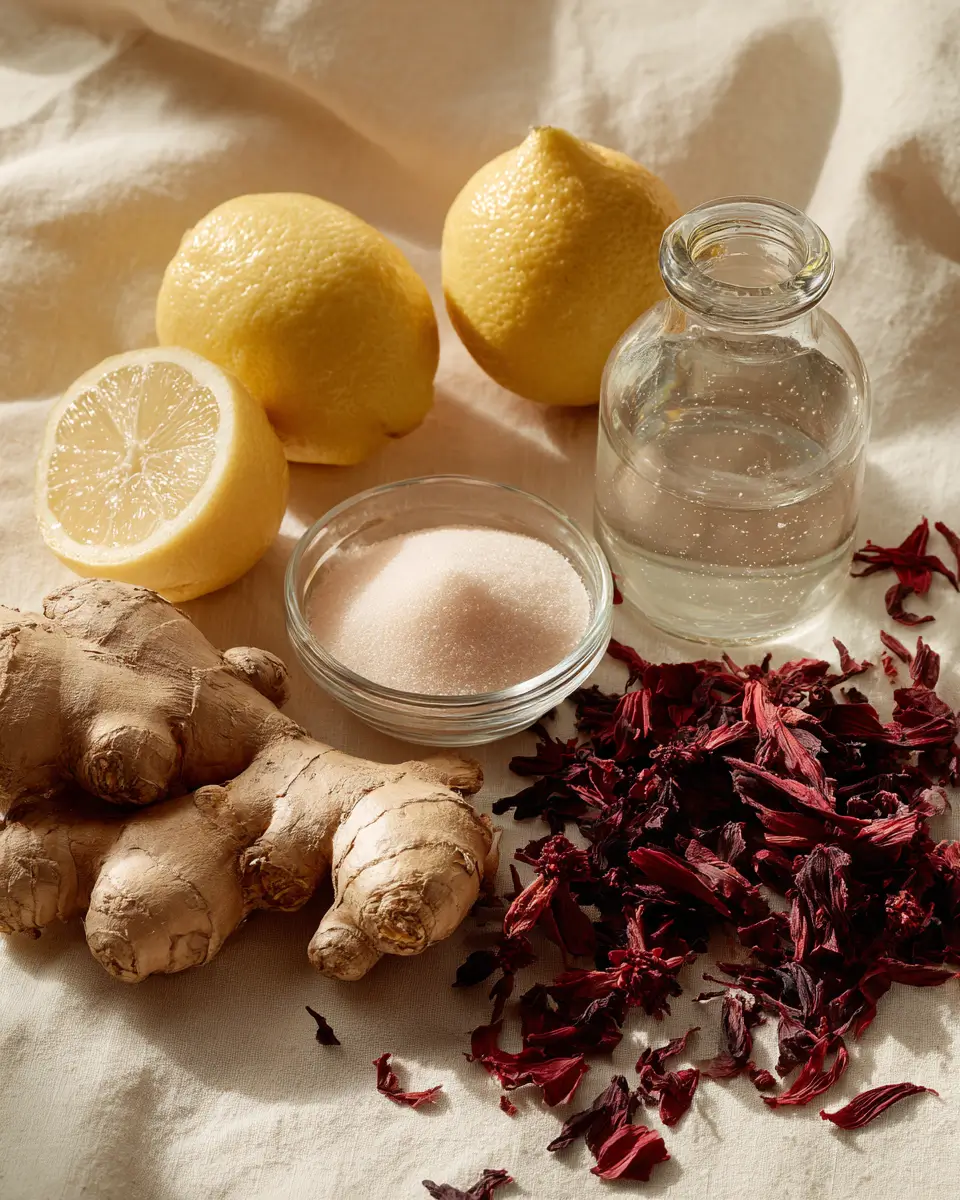
- 3 tablespoons fresh ginger, finely grated, unpeeled (organic preferred)
- 3 tablespoons organic cane sugar
- 2 cups filtered or non‑chlorinated water
For the soda base (per batch):
- 4 cups fruit juice, brewed tea, or lightly flavored water, cooled to room temperature
- ½ cup strained, active ginger bug liquid
- 2–3 tablespoons organic cane sugar (skip if your juice is already quite sweet)
- Optional: juice of 1 lemon or lime for brightness
- Optional: small extras like vanilla, hibiscus, mint, or spices for flavor
Equipment
2–3 swing‑top glass bottles (or other fermentation‑safe bottles)
1 medium glass jar (for the ginger bug)
Cheesecloth or a clean kitchen towel + rubber band
Measuring spoons and cups
Funnel
Step-by-step: how to make your ginger bug
Step 1 – Mix the starter
Add the water, grated ginger, and sugar to a clean glass jar. Stir until the sugar has fully dissolved. Cover the jar with a breathable cloth held in place with a rubber band. Place it at room temperature, away from direct sunlight.
Step 2 – Feed daily
For 5–7 days, feed your bug once a day with:
- 1 tablespoon grated ginger
- 1 tablespoon sugar
Stir well each time, re‑cover, and leave it on the counter.
Signs your ginger bug is becoming active:
- Tiny bubbles rising through the liquid or forming at the surface
- A shift from purely sweet to a lightly yeasty, tangy aroma
- More visible fizz when you stir
When it’s bubbling consistently and smells pleasantly alive—not rotten or moldy—it’s ready to use.
Step 3 – Move to maintenance
Once active, you can:
- Keep it on the counter and feed daily, or
- Store it in the fridge and feed it about once a week
When you want to brew soda, take it out of the fridge a few hours ahead so it can wake up.
Step-by-step: how to make probiotic soda
Step 1 – Prepare the base
Choose your flavor base:
- Juice (lemon, apple, grape, pineapple, etc.)
- Strong herbal or hibiscus tea
- Tea plus a splash of juice
Whatever you use, it must be completely cooled to room temperature. Hot liquid can damage or kill the cultures in your ginger bug and leave you with flat soda.
Step 2 – Combine with ginger bug
In a jug or large bowl, mix:
- 4 cups cooled base
- ½ cup strained, active ginger bug
- 2–3 tablespoons sugar (if needed)
- Any optional extras (lemon or lime juice, vanilla, spices, herbs)
Stir gently to combine.
Step 3 – Bottle with headspace
Use a funnel to pour the mixture into clean swing‑top bottles, leaving about 2–5 cm (1–2 inches) of space at the top. That gap is important; it gives the carbonation room to build without pushing too hard against the glass. Seal the bottles tightly.
Step 4 – Ferment at room temperature
Leave the bottles on the counter for 1–3 days. Once a day:
- Crack each cap just enough to let out a little gas (“burping”),
- Then close it again.
Begin tasting on day 2. When the soda is fizzy, lightly tart, and not overly sweet, it’s ready to move on.
Step 5 – Chill and enjoy
Transfer the bottles to the refrigerator. The cold slows fermentation and stabilizes both flavor and fizz. Serve chilled, ideally within the first week for the best carbonation.
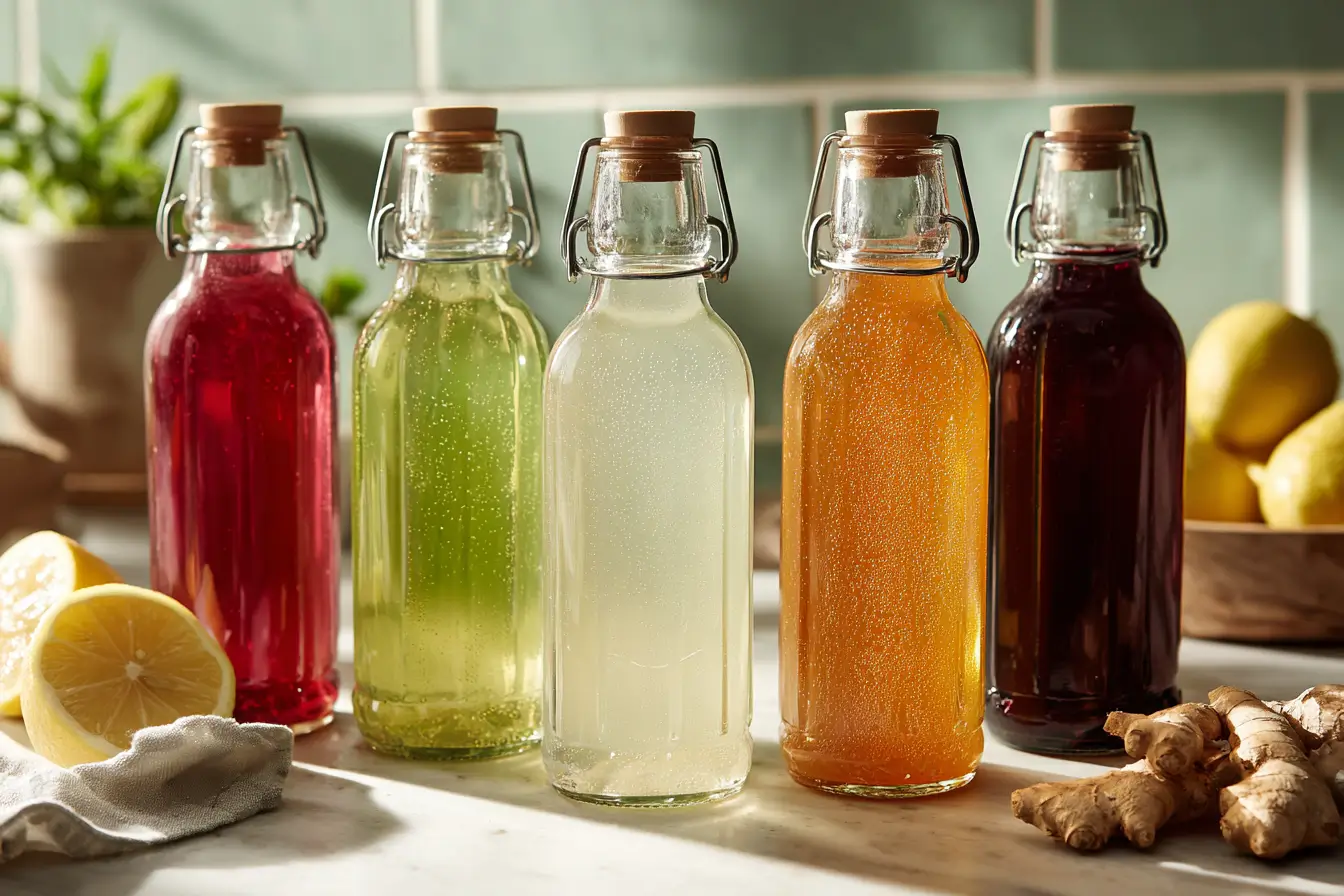
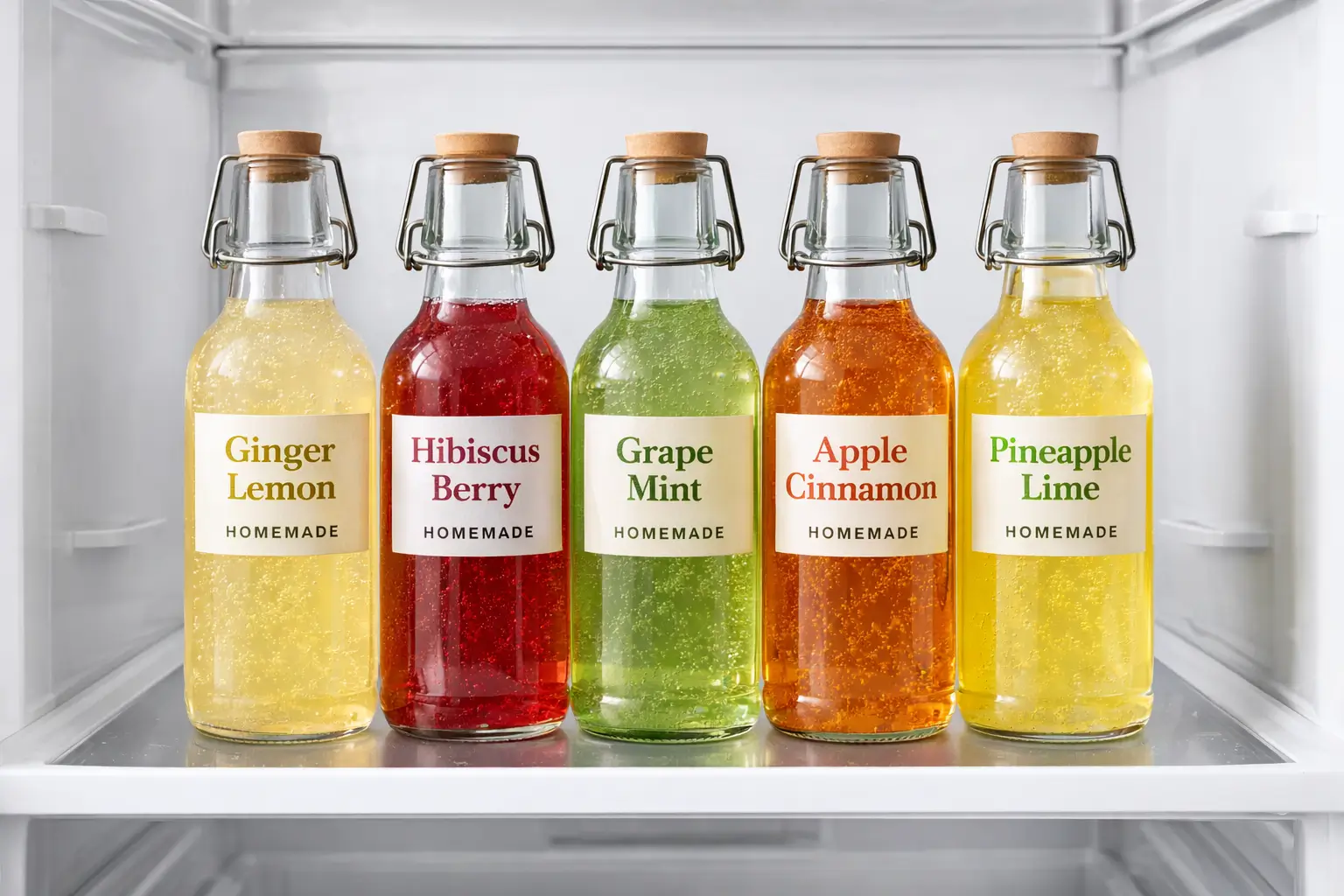
5 probiotic soda recipes for gut health and weight loss
All five of these recipes use the same base formula:
4 cups base + ½ cup active ginger bug + 1–3 tablespoons sugar + optional flavorings
1. Classic Ginger Lemon Probiotic Soda
- 4 cups filtered water + juice of 3 lemons
- 3 tablespoons cane sugar
- ½ cup active ginger bug
Flavor profile: Bright, clean, and lightly tart with a gentle ginger warmth. Think classic lemon soda with better ingredients and less sweetness.
Why it works: It’s simple, forgiving, and almost everyone likes it—perfect for your very first batch.
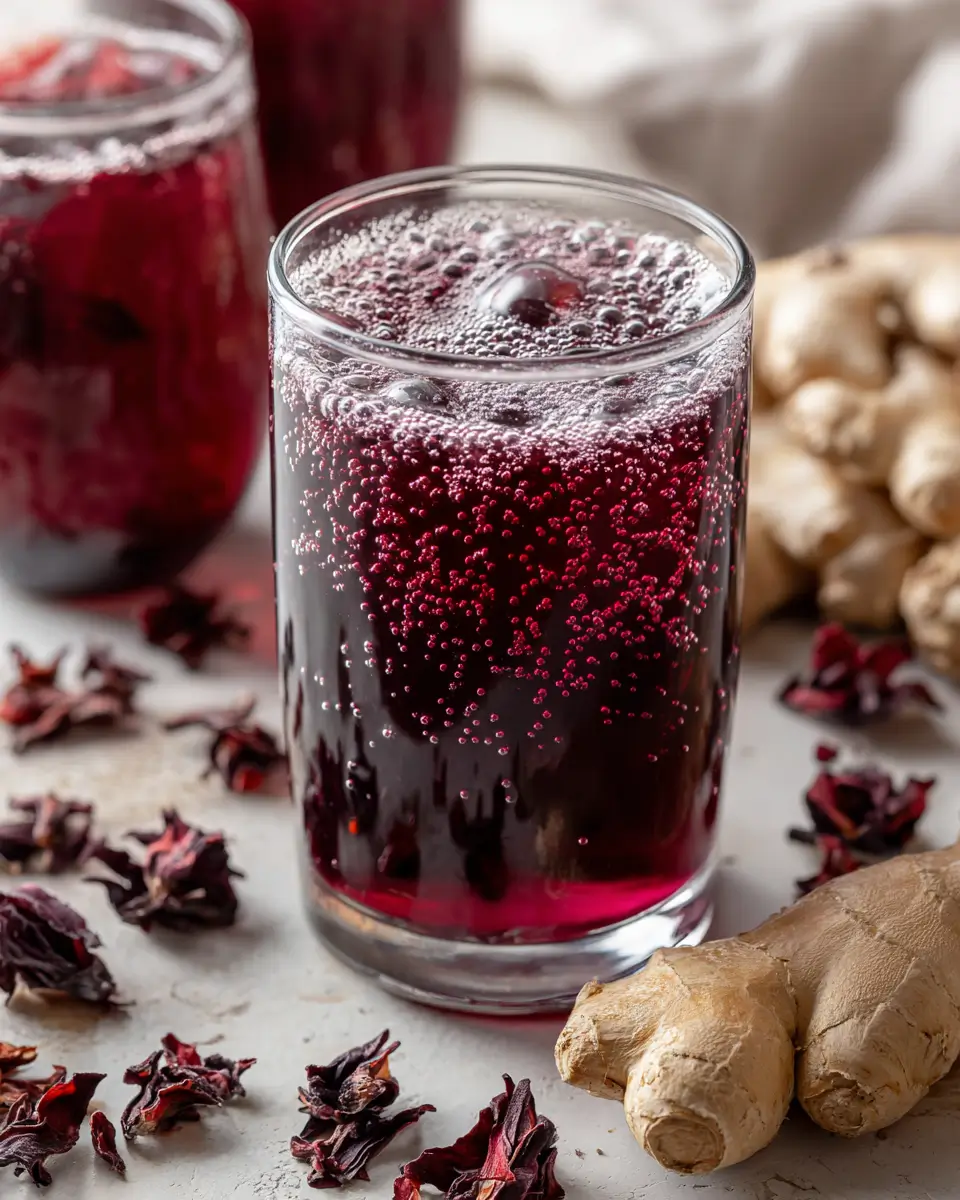
2. Hibiscus Berry Probiotic Soda
- 4 cups strong hibiscus tea, cooled
- ½ cup berry juice (raspberry or strawberry, optional boost)
- 2 tablespoons honey or cane sugar
- ½ cup active ginger bug
Flavor profile: Deep pink, floral, and tangy, with just enough sweetness to feel like a treat.
Why it works: Hibiscus ferments beautifully and looks gorgeous in the glass—great for summer or when you’re serving guests.
3. Apple Cinnamon Probiotic Soda
- 4 cups unsweetened apple juice
- ¼ teaspoon ground cinnamon
- ½ cup active ginger bug
Flavor profile: Cozy and lightly spiced, similar to a fizzy apple cider.
Why it works: Apple juice ferments quickly, and cinnamon adds warmth plus its own digestion‑friendly reputation. It’s a good choice for cooler months or an evening drink.
4. Grape Mint Probiotic Soda
- 4 cups unsweetened grape juice
- 4–6 fresh mint leaves, briefly steeped in the base
- ½ cup active ginger bug
Flavor profile: Naturally sweet and refreshing, with a clean herbal note from the mint.
Why it works: The mint keeps the grape from feeling too heavy and gives a cool sensation that makes the drink feel extra refreshing.
5. Tropical Pineapple Lime Probiotic Soda
- 4 cups unsweetened pineapple juice
- Juice of 1 lime
- ½ cup active ginger bug
Flavor profile: Tropical, bright, and slightly tangy, like a beach‑bar mocktail.
Why it works: Pineapple has enough natural sugar to ferment well and develop complexity in just a couple of days. Lime keeps everything sharp and lively.
How probiotic soda can support weight loss
A homemade probiotic soda is not a magic solution—but it does create a helpful environment for weight management in two simple ways:
- You reduce calories and sugar without feeling deprived.
Swapping one regular soda per day (around 140 calories and nearly 39 g of sugar) for a homemade probiotic version (often around 30–40 calories and roughly 5–7 g of sugar per 12 oz) cuts a meaningful amount of sugar and energy intake over time. - You support a healthier gut microbiome.
Regularly feeding your gut with fermented drinks and other probiotic foods helps maintain a more diverse, balanced microbiome. A healthier microbiome is linked with smoother digestion, better energy regulation, less bloating, more stable appetite, and easier weight control when combined with sensible eating and movement.
The key is consistency. One glass here and there won’t do much. Making probiotic soda your go‑to “soda slot” most days is where the real payoff shows up.
A simple weekly probiotic soda routine
Once your ginger bug is established, you can fold probiotic soda into your week without thinking too much about it.
Sunday
- Feed the ginger bug (if stored in the fridge, take it out and let it warm up).
- Mix 1–2 batches of your chosen flavors.
- Bottle and leave them at room temperature.
Monday–Tuesday
- Burp each bottle once per day.
- Listen and feel for pressure; taste if you’re curious.
Tuesday or Wednesday
- As soon as the soda is pleasantly tart and nicely fizzy, move all bottles to the fridge.
Wednesday–Saturday
- Enjoy about one 12‑ounce serving per day as your regular “soda moment.”
This routine keeps things low‑effort while giving your gut a steady trickle of support.
Common mistakes to avoid
To keep your probiotic soda safe and successful, avoid these pitfalls:
- Adding starter to hot liquid. Anything warmer than about 32–35°C (90–95°F) can damage the cultures. Always cool your base completely.
- Using chlorinated tap water. Chlorine can stress or weaken the microbes. Use filtered or dechlorinated water whenever possible.
- Skipping daily burping. Pressure builds quickly in sealed bottles. Burp once per day to avoid gushers or, in extreme cases, cracked glass.
- Over‑fermenting on the counter. After 2–3 days at room temperature, flavors can tip from pleasantly tart to too vinegary. Taste early and chill when it’s right.
- Using reactive or flimsy containers. Stick to glass jars and sturdy bottles meant for carbonation, and keep metal contact brief.
Is it safe to drink every day?
For most healthy adults, one cup (about 240–350 ml) of lightly sweetened homemade probiotic soda per day is a reasonable and enjoyable habit. If you are new to fermented foods, start with a smaller amount and pay attention to how your body responds—some people notice a bit of gas or bloating at first while their microbiome adjusts.
Naturally fermented sodas do contain a very small amount of alcohol as a byproduct of fermentation, usually quite low when fermented briefly and kept cold. If you are pregnant, immunocompromised, in recovery from alcohol dependence, or managing specific medical conditions, talk with a healthcare professional before making unpasteurized fermented drinks a daily habit.
Frequently Asked Questions About Probiotic Soda Recipes
How do you make your own probiotic soda at home?
Start by preparing a ginger bug—a simple wild starter made from fresh grated ginger, sugar, and filtered water that you feed once a day for about five days, until it smells tangy and bubbles actively. This living culture is what powers the natural carbonation in your probiotic soda. Once the bug is lively, you mix a small amount of it into a cooled, lightly sweetened base such as lemon juice, fruit juice, or strong herbal tea, then bottle the mixture in airtight swing‑top bottles and leave it at room temperature for 2–3 days. Burp the bottles once daily to release excess pressure, and move them to the refrigerator as soon as the soda tastes fizzy and pleasantly tart. From scratch, the whole process takes roughly a week, but after your ginger bug is established, each new batch is ready in just a few days.
Which probiotic soda tastes the best?
For most people just starting out, a simple ginger lemon soda is the easiest winner. It’s bright, lightly tart, and carries a gentle ginger warmth that makes it feel special without overwhelming the palate—almost like a cleaner, fresher take on sparkling lemonade.
If you lean toward fruitier drinks, raspberry or strawberry sodas fermented with a ginger bug are fantastic in warm weather. Hibiscus gives you a deep ruby‑red soda with a floral, tangy twist that often surprises people in the best possible way. Turmeric brings an earthy, cozy flavor that works especially well with a touch of honey for balance. In the end, the “best” probiotic soda recipe is simply the one you reach for again and again—the flavor that naturally fits into your daily routine.
Are probiotic sodas actually good for you?
When made through genuine fermentation, yes. The Best Probiotic Soda Recipe relies on natural fermentation, meaning homemade soda contains live bacteria and wild yeasts that survive the process without any pasteurization
According to research reviewed by the Harvard T.H. Chan School of Public Health, fermented foods with live cultures can support gut microbiome diversity, which is linked to better digestion, stronger immunity, and overall wellbeing.
The key distinction with homemade probiotic soda is that the cultures remain alive because the drink is never heated after fermentation. Many commercial probiotic sodas are pasteurized after bottling, which eliminates the live cultures entirely. Making it at home is the most reliable way to get the real benefit.
Is it okay to drink probiotic soda every day?
For most generally healthy adults, enjoying about one cup of homemade probiotic soda daily is a reasonable and pleasant routine. If you are just starting with fermented foods, begin with a smaller amount and increase slowly so your digestion has time to adapt to the live cultures.
Keep in mind that naturally fermented sodas do contain a small amount of alcohol produced during fermentation, usually very low (often below 0.5 percent), in the same range as very ripe fruit or other lightly fermented foods. If you are pregnant, immunocompromised, or living with a specific medical condition, it is safest to speak with a healthcare professional before turning fermented drinks into a daily habit.
The National Center for Complementary and Integrative Health offers clear, evidence-based guidance on probiotics and fermented foods that is worth reading if you want the science behind the benefits.
Do I have to use ginger?
For the main method in this article, yes—a ginger bug is the starter. Once you’re comfortable, you can experiment with other starters, such as whey from yogurt or water kefir grains, but the process and flavor will change slightly.
How long does probiotic soda keep in the fridge?
Usually up to 1–2 weeks. It will slowly continue to ferment, so open carefully and drink earlier if you prefer a gently tart flavor.
Can I make it completely sugar‑free?
No—microbes need some sugar to ferment and produce carbonation. You can keep added sugar low and let the cultures consume much of it, but zero‑sugar fermentations are not practical with this method.
Ready to make your own probiotic soda at home?
There’s something quietly satisfying about looking after a living starter and watching it transform simple ingredients into a bottle of real, natural fizz. A ginger bug isn’t complicated, but it is alive—and giving it a few minutes of attention each day is one of those small kitchen habits that starts to feel surprisingly rewarding.
Begin with the ginger lemon soda. It’s forgiving, it’s bright and delicious, and it will show you exactly how fermentation looks, smells, and behaves in your own kitchen. Once that feels familiar, you can play: try a hibiscus batch, switch to berries in summer, or bottle two flavors side by side and see which one disappears from the fridge first.
If you try any of these recipes, I’d love to hear how it went—share in the comments which flavor you chose and how many days it took to reach your perfect level of fizz. Every home ferments a little differently, and comparing notes helps all of us get better at it. Happy fermenting, from my kitchen to yours.
Amelia
Friendly Reminder
Everything shared here is for general information only and is not a substitute for personal medical advice.
Always check with your doctor or a qualified health professional before changing your diet, especially if you are pregnant, nursing, taking medication, or living with a medical condition.
Nutrition numbers are estimates and can vary based on brands, ingredients, and portions. Your body is unique, so introduce fermented drinks slowly and pay attention to how you feel.